Engagement Party Invitation Template: Your Guide to Effortless Celebration Invites
There's something undeniably special about sending out that first official "we're engaged!" announcement—not just on social media, but through a beautifully crafted invitation that sets the tone for your celebration. Yet many couples find themselves staring at blank design software, overwhelmed by the pressure to create something that feels both personal and polished. What if you could skip the design anxiety entirely and start with a professional foundation that you can make uniquely yours in minutes?
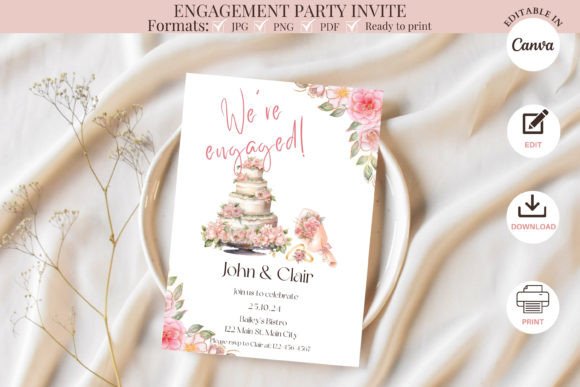
An editable engagement party invitation template does exactly that. Think of it as a professionally designed starting point that removes the guesswork from layout, typography, and visual hierarchy while leaving all the personal details completely in your hands. You're not buying a finished product with someone else's names and dates printed on it—you're getting a flexible design system built in Canva that adapts to your specific celebration, your aesthetic preferences, and your printing needs.
Why Templates Make Sense for Real Life
Here's the reality that design magazines rarely acknowledge: most people planning an engagement party are also juggling wedding planning, work commitments, and the everyday chaos of life. They want beautiful stationery without investing twenty hours learning design principles or paying a freelancer several hundred dollars for a single invitation.
A well-structured template bridges that gap. When you open a properly built Canva template, you encounter organized layers, pre-selected font pairings that actually work together, and color schemes that have been tested for both screen and print. The spacing between elements—the margin around the border, the distance between the couple's names and the event details, the size relationship between the main headline and the secondary information—has already been considered by someone who understands visual communication.
That doesn't mean you're locked into someone else's vision. Every element remains editable. Prefer a script font for the names but a clean sans serif for the venue address? Change it. Want to swap a floral illustration for a geometric frame? Drag and drop your own graphics. The template provides structure; you provide personality.
Understanding What You Actually Receive
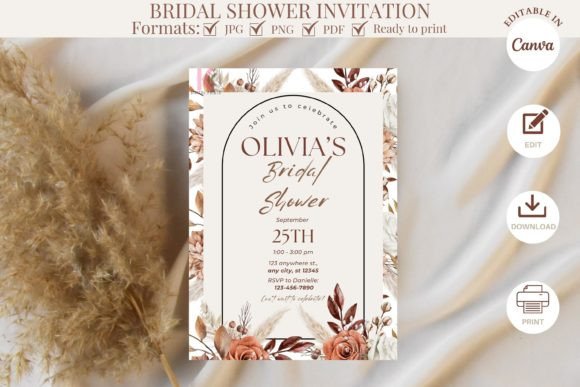
A quality engagement party invitation template typically includes multiple format options designed for different workflows. The standard 5" x 7" size works beautifully as a standalone card—perfect for mailing in A7 envelopes or handing out at gatherings. But many hosts also appreciate an 8.5" x 11" layout with two invitations per sheet, which makes home printing significantly more efficient and reduces paper waste.
What makes this approach particularly practical is the Canva integration. You don't need to purchase design software or navigate complicated download processes. If you have a free Canva account—which takes about sixty seconds to set up—you can open the template link, make every adjustment directly in your browser or on your phone, and export in whatever format suits your next step. PDF works for professional or home printing. JPG handles commercial print shop requirements. PNG creates clean files for emailing to guests or sharing on social platforms.
The ability to edit from a mobile device deserves particular emphasis. Plenty of couples do their planning during commutes, lunch breaks, or those quiet moments before bed. Being able to tweak font sizes or swap a color accent from your phone—without losing quality or functionality—transforms the entire experience from a desktop-only task into something that fits naturally into your schedule.
Making Design Decisions That Actually Matter
When customizing your invitation, a few considerations make the difference between something that looks "fine" and something that genuinely impresses guests.
Font selection sets the entire mood. A flowing script typeface suggests romance and elegance—ideal for formal evening celebrations. A modern sans serif with generous letter spacing feels contemporary and clean, perfect for cocktail parties or casual gatherings. Many templates include suggested pairings, but don't hesitate to experiment. Try a bold display font for the couple's names paired with a lighter weight of the same typeface family for the details. This creates visual hierarchy while maintaining cohesion.
Color choices should reflect the actual event. If your engagement party features specific décor—say, sage green and dusty rose—echo those tones in the invitation. This isn't just about aesthetics; it creates expectation and helps guests mentally prepare for the atmosphere they'll encounter. Canva's color picker makes sampling exact shades straightforward, and you can save custom palettes for consistency across all your wedding-related materials.
White space is your friend. The temptation to fill every corner with decorative elements is understandable, but restraint communicates sophistication. A clean layout with breathing room around the text actually draws more attention to the important information and feels more intentional than a crowded design. Trust the template's original spacing as a starting point, and if you add elements, watch how they affect the overall balance.
Readability trumps everything. That gorgeous hand-lettered font might look stunning at large sizes on your screen, but will guests actually be able to read the venue address when holding a 5" x 7" card? Print a test copy at actual size before committing. If you need to squint or tilt the card to decipher a line of text, consider increasing the font size or switching to something with clearer letterforms.
Beyond the Invitation: Building a Cohesive Celebration
Once you've customized your engagement party invitation template, you've essentially established a visual language for the entire event. That same design system—those specific fonts, colors, spacing choices, and decorative motifs—can extend to welcome signs, table numbers, menu cards, favor tags, and thank-you notes.
This is where template-based design reveals its real power. Rather than creating each piece from scratch or hoping disparate purchased items look like they belong together, you're building a unified brand identity for your celebration. Guests notice these details, even subconsciously. When the invitation they received three weeks ago shares visual DNA with the signage greeting them at the venue and the favor tag on their departure gift, the entire experience feels curated and thoughtful.
Small business owners and event planners recognize this principle immediately—it's the same logic behind consistent branding across marketing materials. Your engagement party isn't a commercial venture, but it benefits from the same strategic thinking about visual consistency and audience experience.
Practical Steps from Template to Mailbox
After you've finished editing and downloaded your final files, the physical production process matters just as much as the design work. For home printing, use a heavier cardstock—80lb cover weight or higher—to give the invitation a substantial feel that distinguishes it from everyday paper. Adjust your printer settings to the highest quality available, and always run a single test print on plain paper first to check alignment and color accuracy.
If you're sending files to a professional print shop, export as PDF with crop marks included. This gives the printer clear guidance on where to cut, which is especially important for the two-per-sheet layout where precise trimming makes a significant difference in the final presentation.
Consider your envelopes as part of the overall presentation. A beautifully designed invitation tucked into a plain white envelope loses some of its impact. Colored envelopes that complement the invitation's palette, or even simple vellum wraps, add another layer of thoughtfulness that guests appreciate before they even see the card itself.
The entire process—from opening the template link to holding a stack of printed invitations ready for mailing—can realistically happen in a single afternoon. That efficiency doesn't sacrifice quality; it simply respects the reality that your time matters, and the celebration itself deserves more attention than the logistics of announcing it.